Among our treatments, neurostructural therapy is the one that raises the most questions. No oil, no deep pressure, you stay dressed, and yet many clients walk out with a different posture and old tensions that have let go. Here is what to know before you book.
Where NST comes from
The Neurostructural Integration Technique was developed in Australia in the 1990s from the Bowen technique. The principle: precise, light moves, applied in sequences on muscles, tendons and fascia, send information to the nervous system. The body responds by releasing what it was holding tight, often for a long time.
How a session goes
- A conversation at the start, to understand your pain, your body’s history and your daily life.
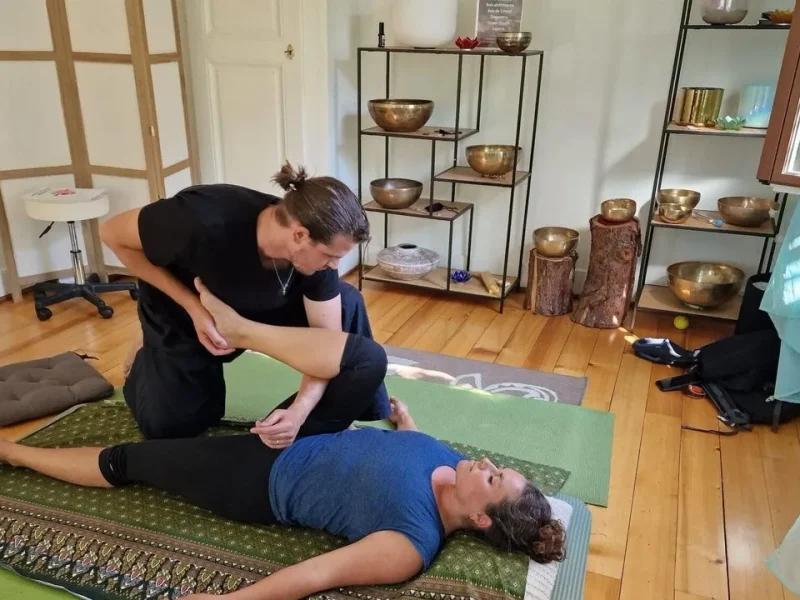
- Lying down, in soft clothing, you receive series of short moves along the spine, pelvis and limbs.
- Between each series the therapist pauses for a few minutes and sometimes leaves the room: that is when the nervous system integrates the work.
- The session lasts about an hour. You often leave very relaxed, sometimes a little tired; the effects continue for two to three days.
Who is it for?
People who have had back or neck pain for a long time and have “tried everything”. Athletes who recover poorly or whose posture has stiffened. Those who cannot tolerate deep massage, or who prefer to stay dressed. Stressed people whose body no longer “comes down”. Henry, co-founder of Izzy Spa, practises it at both our addresses.
What not to expect
NST is not a medical procedure and replaces neither a diagnosis nor a treatment. It does not “fix” a herniated disc or a fracture. It can, however, help the body function better around a problem, reduce tension and restore mobility. Always mention a recent injury, a pregnancy or an ongoing condition before the session.
How many sessions?
A first session is often enough to feel the difference. For a long-standing tension, allow two to three sessions one to two weeks apart, then maintenance at your own pace. NST combines well with a sports massage a few days later, or with Reiki for those also looking for mental calm.