On the evening itself you mostly feel tired. The real stiffness arrives the next morning, sometimes the day after that. It is the well-known 24-to-48-hour peak: the micro-tears created by turns, moguls and off-piste trigger a small inflammation, and the body repairs. A massage at that moment does more than relieve: it speeds up the repair.
What the massage really does
A deep massage restarts circulation in the muscles you used (thighs, calves, glutes, lower back), helps clear the by-products of effort and gives the joints their range back. In Verbier, where cold contracts everything and altitude slows recovery, the effect is even clearer than in the valley.
Which massage to choose?
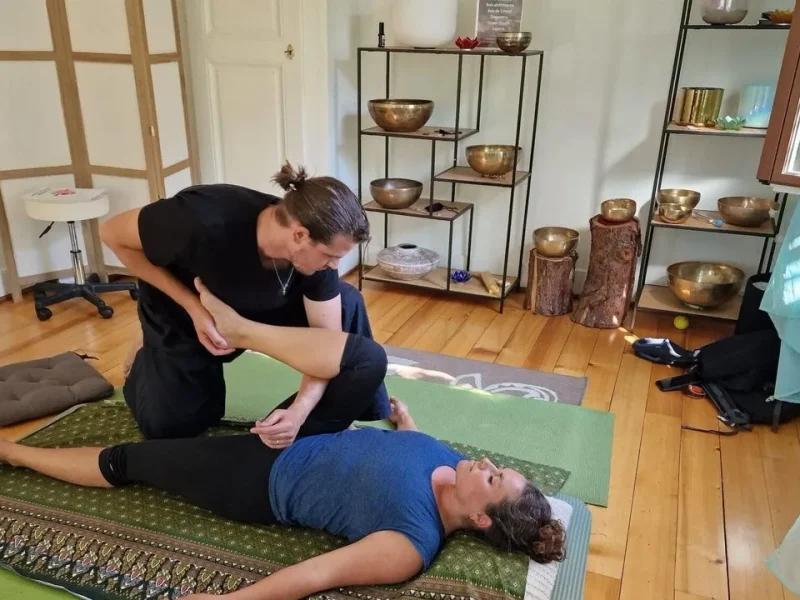
- Real stiffness, a big off-piste day: the sports & deep tissue massage, firm pressure, targeted work.
- Cold settled in the shoulders and back: the hot stone massage, basalt heat loosens without forcing.
- Swollen legs, ski boots that squeezed all day: lymphatic drainage, light and rhythmic.
- Simply need to let go: the Izzy signature massage, warm oils and an unhurried pace.
- Little time between two runs: the 30-minute back massage, without fully undressing.
At what time?
The ideal slot is late afternoon the following day, or the morning of a rest day. Avoid skiing right after a deep massage: the muscles need a few hours to integrate the work. If you are heading back to the slopes the same day, choose a gentler massage or a drainage.
Before: heat
At the Spa, thirty minutes of sauna or hammam before the massage change everything: the tissues are warm and supple, and the therapist can work deeper without pain. That is why our après-ski pack starts with an hour of heat. And at the Studio, a twenty-minute body scrub plays part of the same role.
After: water and quiet
Drink plenty, eat light, and give yourself a quiet evening. Slight sensitivity the day after a deep massage is normal; it fades within 24 hours and leaves legs that respond again. Book online, at the Spa or the Studio, at the time that suits you.